

We've been coming here for 19 years with our 3 kids. The doctors, nurses and staff are amazing! A special shout out to Dr. Thomas Heaphy for all the care provided over the years.
Inga
Most fevers in children are a healthy sign that the body is fighting an infection, and they usually aren't dangerous on their own. Worry less about the exact number and more about your child's age and how they look and act: call right away for any fever of 100.4°F or higher in a baby under 3 months, and seek emergency care for trouble breathing, a seizure, or a child who is hard to wake.
Few things make a parent's heart race like a warm forehead in the middle of the night. At Pediatric Professional Association in Overland Park, KS, we help families sort through fevers every day. This guide walks you through what a fever really is, how to help your child feel better, and the signs that mean it's time to call us or get emergency care.
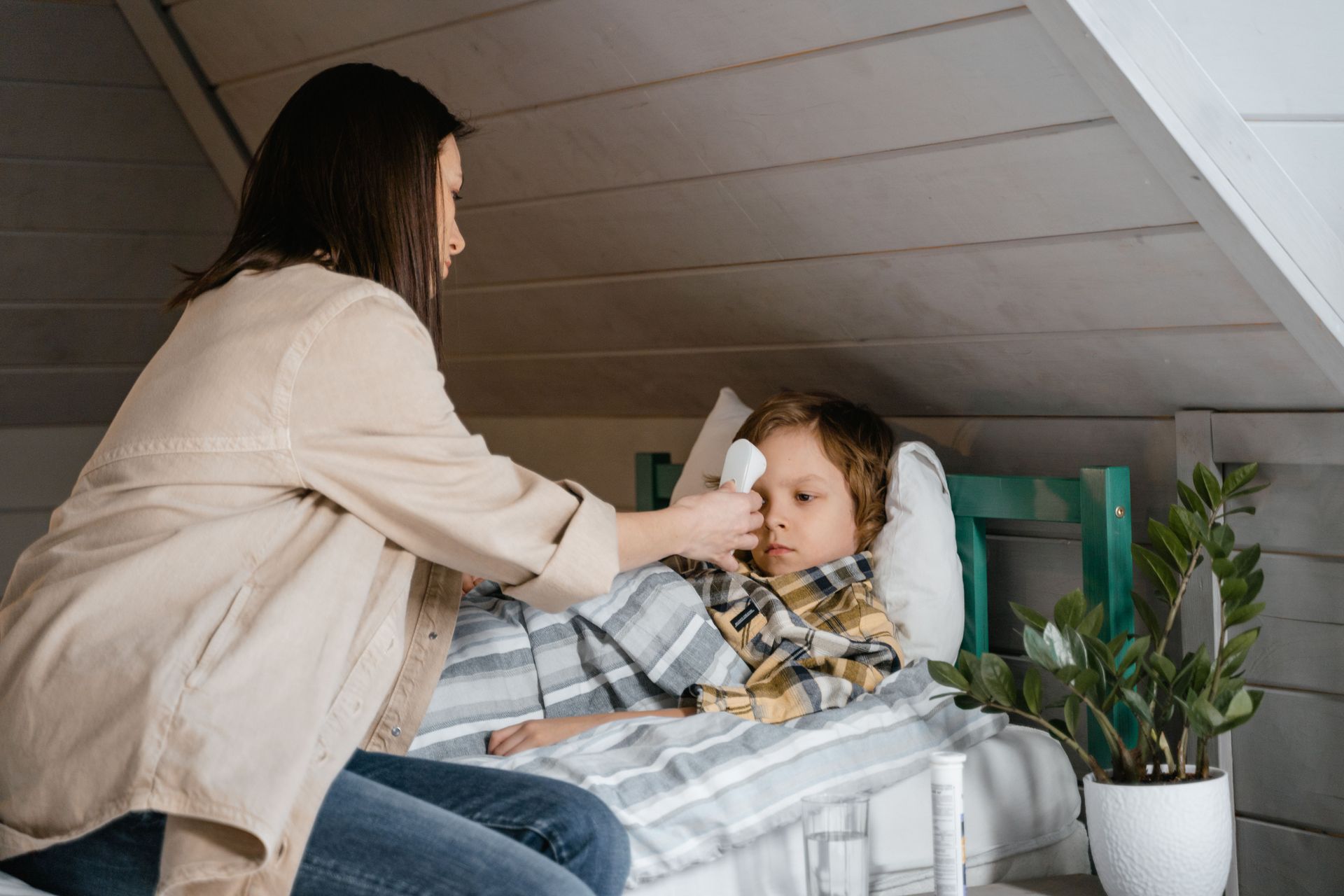
In general, a temperature of 100.4°F (38°C) or higher is considered a fever. A rectal temperature is the most accurate reading for babies and young toddlers. For older kids, oral, ear, or forehead thermometers work well, though readings can vary a little by method.
A few tips for an accurate reading:
Not sure how to take your child's temperature? The "Is Your Child Sick?" section of our website has step-by-step articles, including one just for babies under 12 months.
It may feel scary, but a fever is one of the body's smartest defenses. Raising the body's temperature makes it harder for many viruses and bacteria to multiply. It also helps rally the immune system to fight back.
Most fevers in kids come from common viral illnesses, like colds and flu, and go away on their own in a few days. In most cases, how high the number climbs doesn't tell you how sick your child is. A child with 103°F who is still playing and drinking is often less concerning than a child with 101°F who is listless and won't drink.
That's why we encourage parents to treat the child, not the thermometer.
The goal of fever care is comfort, not bringing the number back to normal. If your child is resting comfortably, it's fine to let them sleep. Here are simple ways to help:
Fever reducers like acetaminophen and ibuprofen can help an uncomfortable child feel better. The right dose depends on your child's weight, not just their age, and on the specific product and concentration you have at home.
A few important safety notes:
Because doses change as children grow, please ask us. Our nurses are happy to help you find the right weight-based dose, and our website's Medicine Dosages section has safety articles on giving over-the-counter and liquid medicines to children.
Call Pediatric Professional Association right away if:
During office hours, a triage nurse will listen to your child's symptoms and help you decide whether and when to come in. We often have same-day sick appointments, so it helps to call early in the day.
Call 911 or go to the nearest emergency room if your child with a fever:
For respiratory distress, go to the closest pediatric emergency room or call 911. Trust your instincts. If you feel your child is in danger, don't wait.
Fevers caused by common infections don't cause brain damage. Very high body temperatures from outside causes, like being left in a hot car, are a different and dangerous situation.
Usually not. Rest is healing, and the goal is comfort. If your child is sleeping peacefully, let them sleep.
That's normal. Fever medicine eases discomfort for a few hours, but it doesn't cure the illness causing the fever. The fever often returns until the body has beaten the infection.
Call our main number, 913-541-3300. Our answering service sends your message to the Children's Mercy After Hours Nurse Triage line, where a trained pediatric nurse can help and reach our on-call physician if needed. There is a $20 fee per after-hours call. For a life-threatening emergency, call 911.
It's best to keep your child home until they've been fever-free for at least 24 hours without fever medicine, and they're feeling well enough to join in.
You don't have to figure out a fever on your own. Call Pediatric Professional Association at 913-541-3300 to book a sick visit or talk with one of our nurses. Sick visits are by appointment, and we're often able to see children the same day. We're located at 10600 Quivira Road, Suite 210, in Overland Park, KS, and open Monday through Thursday, 8:00 a.m. to 5:00 p.m., and Friday, 8:00 a.m. to 4:00 p.m. We're glad to help your little one feel better soon.